

The Compact Powerhouse: Unleashing Potential with the Mini-ITX Motherboard
2026-03-30
The Compact Powerhouse: Unleashing Potential with the Mini-ITX Motherboard
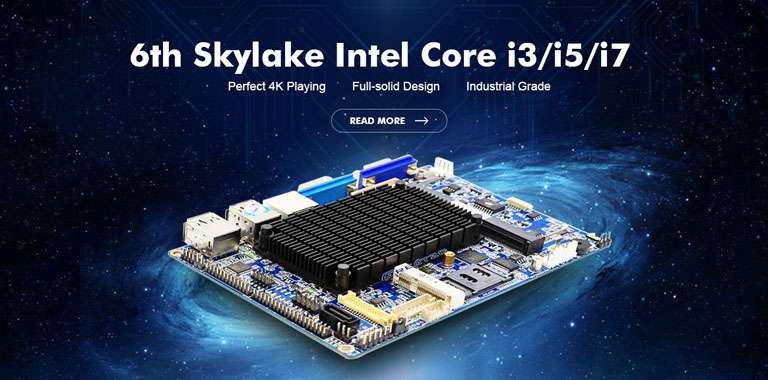
In the diverse ecosystem of computing hardware, few innovations have balanced compactness with capability as effectively as the Mini-ITX Motherboard. Originally conceived as a small-form-factor solution for embedded applications, this versatile platform has transcended its origins to become a cornerstone of everything from industrial control systems and digital signage to home theater PCs and compact gaming rigs. The Mini-ITX Motherboard represents a masterful exercise in engineering efficiency, delivering desktop-class performance within a footprint that enables deployment in spaces where traditional motherboards simply cannot fit.
The Mini-ITX Motherboard derives its name from its physical dimensions: a square measuring 170 millimeters by 170 millimeters. This compact size, developed by VIA Technologies in 2001, was initially designed for small, low-power embedded systems. However, its utility quickly expanded as manufacturers recognized the demand for powerful computing in space-constrained environments. Today, the Mini-ITX Motherboard has become an industry standard, supported by a vast ecosystem of compatible cases, power supplies, and components that make it a go-to choice for system integrators, embedded engineers, and DIY enthusiasts alike.
The architectural philosophy behind a Mini-ITX Motherboard is one of intelligent consolidation. Despite its diminutive footprint, a well-designed board integrates a remarkable array of features that rival those of larger form factors. The processor, chipset, memory slots, storage interfaces, and extensive I/O are all carefully arranged on a single, compact board. This consolidation reduces system complexity, minimizes cabling requirements, and enhances overall reliability by eliminating the need for multiple discrete components. The result is a platform that can deliver substantial computing power in enclosures as small as a few liters in volume.
Processing capabilities on modern Mini-ITX Motherboard designs span an impressively wide spectrum. At the entry level, energy-efficient processors enable completely fanless, passively cooled systems ideal for industrial automation, digital signage, and IoT gateway applications where silence and reliability are paramount. Mid-range configurations provide balanced performance for general-purpose computing, retail point-of-sale systems, and home theater setups. At the high end, premium Mini-ITX Motherboard designs support powerful processors capable of handling demanding workloads such as content creation, virtualization, and even gaming, proving that small size need not mean compromised performance.
Memory architecture on these compact boards has kept pace with broader industry trends. Most Mini-ITX Motherboard designs feature two SO-DIMM or standard DIMM slots, supporting up to 64 gigabytes or more of DDR4 or DDR5 memory. This capacity enables these small-form-factor systems to handle sophisticated software stacks, virtualization environments, and memory-intensive applications with ease. The use of high-speed memory interfaces ensures that data-intensive tasks are processed efficiently, maintaining responsiveness even under heavy loads.
Storage options on a Mini-ITX Motherboard reflect the diversity of deployment scenarios. Traditional SATA interfaces remain available for connecting 2.5-inch or 3.5-inch drives where high capacity or cost-effectiveness is prioritized. Increasingly, however, these boards incorporate M.2 slots supporting high-speed NVMe storage, delivering dramatically faster boot times and data access for performance-critical applications. Some designs offer multiple M.2 slots, allowing for a combination of high-speed operating system drives and additional storage expansion, all within the compact footprint.
The connectivity capabilities of a Mini-ITX Motherboard are remarkably extensive given its compact dimensions. Networking is a particular strength, with most boards featuring integrated Gigabit Ethernet, while many premium designs now incorporate 2.5 Gigabit or even 10 Gigabit interfaces for enhanced bandwidth. Dual Ethernet ports are common on boards intended for networking applications such as firewalls, routers, and network-attached storage (NAS) devices. Wireless connectivity is often integrated or available via M.2 slots, with support for Wi-Fi 6 and Bluetooth 5.0 becoming increasingly standard.
Display connectivity on a Mini-ITX Motherboard typically includes multiple independent outputs, supporting configurations with two or even three simultaneous displays. HDMI, DisplayPort, and sometimes legacy VGA or DVI interfaces provide flexibility for connecting to a wide range of monitors and displays. This display versatility is essential for digital signage, medical imaging, industrial HMI, and multi-monitor productivity setups.
Expansion potential distinguishes the Mini-ITX Motherboard from smaller form factors that offer limited upgrade paths. Despite its compact size, the board includes a PCI Express x16 slot, allowing for the addition of discrete graphics cards, network interface cards, storage controllers, or specialized industrial I/O cards. This single expansion slot transforms the Mini-ITX Motherboard from a basic computing platform into a highly adaptable system capable of meeting diverse application requirements.
The industrial and embedded applications of the Mini-ITX Motherboard are vast and growing. In factory automation, these boards serve as the intelligence within control panels, running machine control software, hosting operator interfaces, and communicating with programmable logic controllers and sensors. Their compact size allows integration into space-constrained cabinets alongside power supplies and other automation components. For medical devices, the reliability and long-term availability of quality Mini-ITX Motherboard platforms are essential, with deployments in patient monitoring systems, diagnostic equipment, and medical imaging devices requiring certified, stable hardware platforms.
Digital signage and public information displays rely heavily on these compact boards for media playback and content management. The combination of small size, multiple display outputs, and reliable 24/7 operation makes the Mini-ITX Motherboard ideal for driving video walls, interactive information kiosks, and transportation information displays in airports, train stations, and retail environments. Fanless, low-power variants are particularly valued for silent operation in noise-sensitive settings like museums, galleries, and high-end retail.
The home theater and consumer market has embraced the Mini-ITX Motherboard for its ability to deliver powerful computing in aesthetically pleasing, compact enclosures. Enthusiasts build compact gaming systems, home theater PCs, and small-form-factor workstations around these boards, appreciating the balance of performance and footprint that Mini-ITX offers. The availability of premium chipsets and support for high-performance processors has elevated the Mini-ITX Motherboard from a niche embedded solution to a mainstream platform for demanding consumer applications.
Selecting the optimal Mini-ITX Motherboard requires careful evaluation of application requirements against available features. Processor support, defined by the socket and chipset, determines the performance ceiling and must align with computational demands. Memory capacity and type should accommodate both current needs and anticipated future requirements. The quantity and type of I/O interfaces—USB ports, Ethernet, display outputs, audio—must match the peripherals and networks the system will connect with. Expansion slot availability, while limited to a single PCIe slot on Mini-ITX, must be sufficient for any planned add-in cards. For embedded and industrial deployments, long-term availability is a critical consideration, with quality platforms often guaranteed for extended production lifecycles of five to seven years or more.
The evolution of the Mini-ITX Motherboard continues to accelerate alongside broader technology trends. Artificial intelligence acceleration capabilities are increasingly integrated, enabling on-device machine learning for edge analytics without cloud dependency. Enhanced networking, including support for Time-Sensitive Networking (TSN) and 2.5 Gigabit Ethernet, brings advanced connectivity to industrial and consumer applications alike. The adoption of PCIe 4.0 and PCIe 5.0 interfaces delivers dramatically increased bandwidth for storage and expansion cards, ensuring that the Mini-ITX Motherboard remains competitive with larger form factors. Throughout these advancements, the core value proposition—compact size without functional compromise—remains unchanged.
In conclusion, the Mini-ITX Motherboard represents a remarkable achievement in engineering balance. It delivers the processing power, connectivity, and expansion capabilities required for sophisticated applications within a footprint that fits into the most space-constrained enclosures. From industrial automation and medical devices to home theater systems and compact gaming rigs, this versatile platform powers the intelligent infrastructure of the modern world. For system integrators, design engineers, and technology enthusiasts alike, selecting the right Mini-ITX Motherboard is a foundational decision that shapes system capability, reliability, and long-term success in an increasingly diverse computing landscape.
PREV:No
NEXT: The Silent Workhorse: Unleashing Reliability with a Fanless ...
